At a glance
Common name
German chamomile
Botanical name
Matricaria chamomilla (syn. M. recutita)
Family
Asteraceae (the daisy family)
Parts used
Flower heads
Taste
Sweet, softly bitter, apple-scented
Cautions & care
Please read these before using this herb in any form.
- Allergies: chamomile belongs to the daisy family. If you react to ragweed, chrysanthemums, marigolds or daisies, you may react to chamomile too. Rarely, this can be serious.
- Pregnancy and breastfeeding: an occasional weak cup is a common food use, but there is not enough good research on stronger or regular medicinal amounts. Please ask your midwife, doctor or pharmacist first.
- Medication: chamomile may interact with blood thinners such as warfarin and may add to the effect of sedatives, sleeping tablets and alcohol. If you take any regular medication, check with your pharmacist.
- Surgery: stop taking chamomile in medicinal amounts about two weeks before planned surgery, and tell your surgical team.
- Babies and children: do not give herbal teas to babies without advice from a health visitor or doctor.
If in doubt, leave it out, and ask a qualified medical herbalist, pharmacist or doctor.
There is a reason chamomile is often the first herb anyone learns. It asks so little. A pinch of dried flowers, a kettle, a few patient minutes, and the whole kitchen begins to smell faintly of apples and hay.
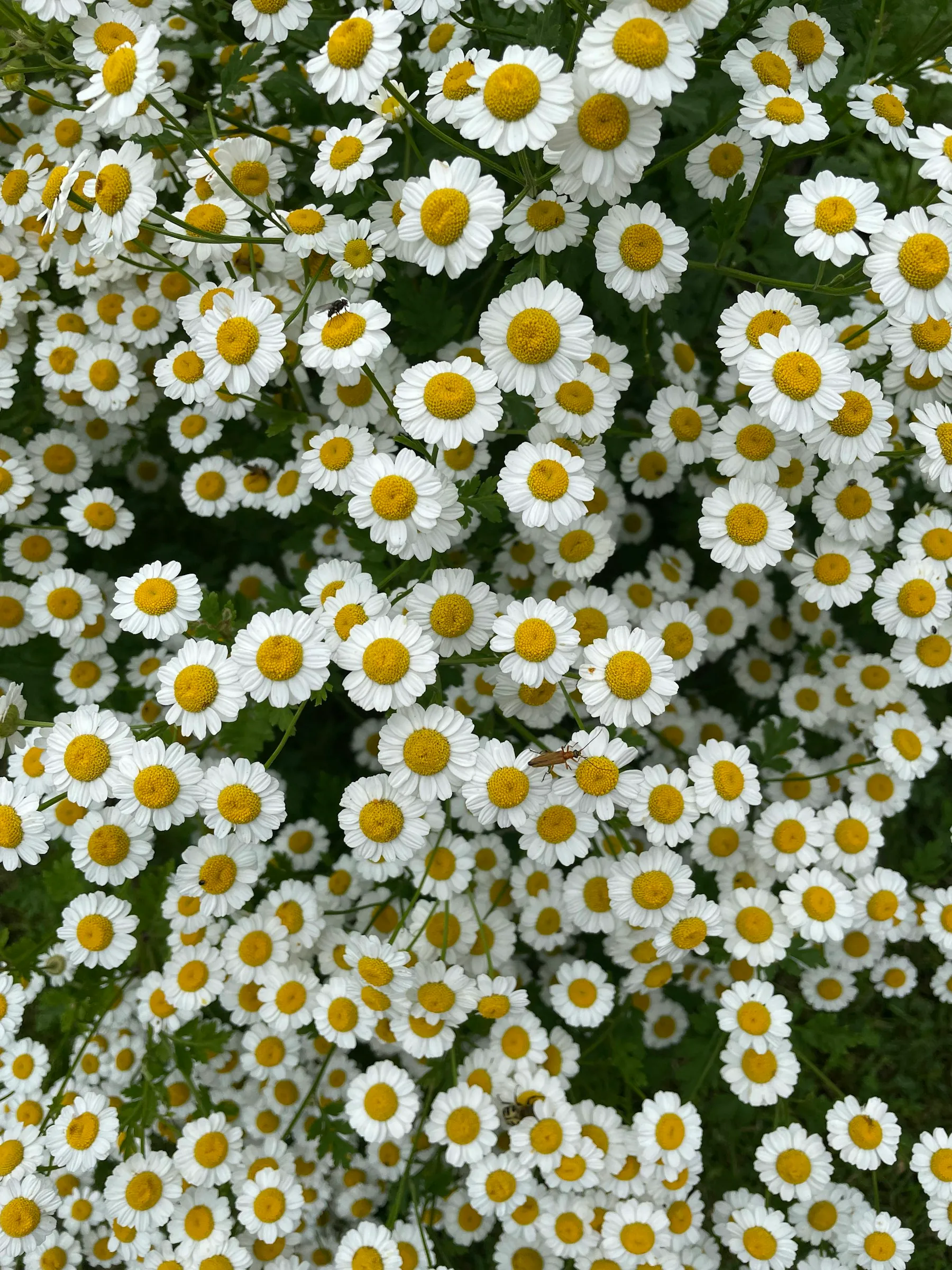
The name comes from the Greek khamaimēlon, "ground apple", for the scent the plant releases when you brush past it. It is a modest thing to look at: a feathery, knee-high annual with small white-petalled flowers, each centre a raised golden dome. When the petals fold back towards the stem, the flowers are ready to pick.
What chamomile has been used for
For centuries chamomile has been a household herb across Europe and beyond, used as a calming evening tea, a soother for an unsettled stomach after a heavy meal, and a gentle wash for tired skin. Modern research is still catching up with tradition: some small studies suggest it may help with mild anxiety and sleep quality, but the evidence is limited and mixed.
I think of it less as a remedy and more as a ritual of softening. The making of the tea is half the medicine. You cannot hurry chamomile.
A cup of chamomile is a small permission: to stop, to sit, to let the day finish without you.
How to make a proper cup
Most chamomile teabags are dusty and disappointing. Whole dried flowers make a world of difference.
- Use one to two teaspoons of dried flower heads per mug.
- Pour over water just off the boil.
- Cover the cup while it steeps. The fragrant oils rise with the steam, and a saucer keeps them in your tea instead of your kitchen.
- Steep for five to ten minutes. Longer brews turn more bitter, which some people love.
- Strain, and add a little honey if you like.
Growing your own
Chamomile grows easily from seed scattered on bare soil in spring; it needs light to germinate, so press it in rather than burying it. Give it sun and well-drained ground and it will often seed itself the following year. Pick the flower heads on a dry morning once the dew has lifted, and dry them on a cloth or screen somewhere warm, dark and airy. Store in a glass jar away from light, and use within a year.
A small ritual
On the evenings when your mind keeps running after the day has ended, make a cup of chamomile and drink it somewhere other than where you work. Hold the warmth in both hands. Name three things you are setting down for the night. Then let the cup be empty.
[ADD YOUR OWN STORY OR MEMORY OF CHAMOMILE HERE, IF YOU LIKE.]
This profile is for education and reflection. It is not medical advice, and it is not a substitute for guidance from a qualified herbalist, pharmacist or doctor, especially if you are pregnant, breastfeeding, managing a health condition or taking medication.