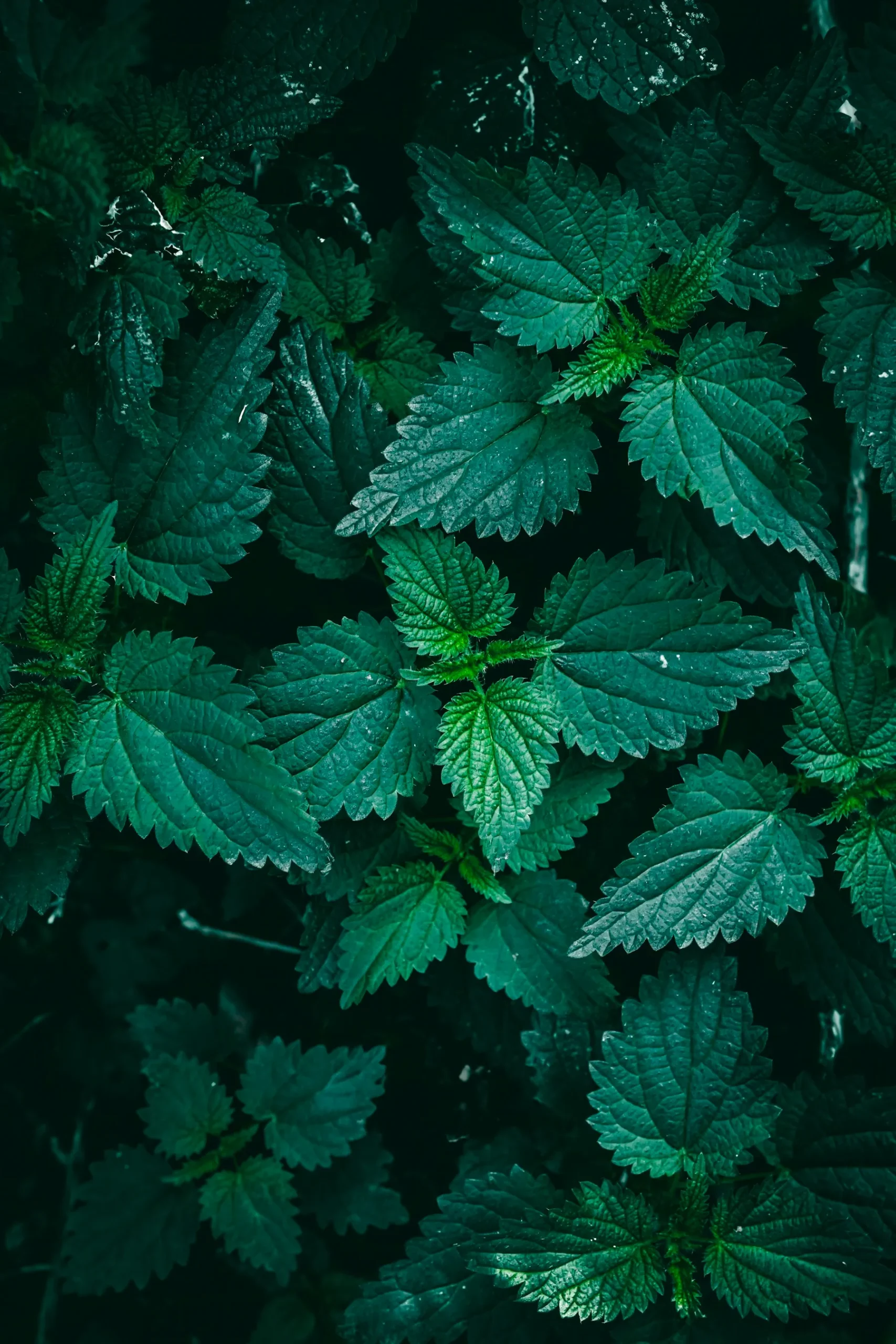
At a glance
Common name
Stinging nettle
Botanical name
Urtica dioica
Family
Urticaceae
Parts used
Young leaves and tops (root and seed are used separately)
Taste
Green, mineral, faintly salty
Cautions & care
Please read these before using this herb in any form.
- Handling: fresh nettle stings. Wear gloves to gather it. Drying, cooking or steeping removes the sting.
- Pregnancy and breastfeeding: nettle is traditionally avoided in medicinal amounts during pregnancy, and there is not enough reliable research to call it safe. Please speak with your midwife or doctor first.
- Medication: nettle leaf may have a mild diuretic effect and may lower blood pressure and blood sugar. Take care, and check with your pharmacist, if you take diuretics, blood pressure medicine, diabetes medicine or lithium. It is also rich in vitamin K, which matters if you take warfarin.
- Kidney and heart conditions: because of its diuretic action, ask your doctor before using nettle regularly if you have a kidney or heart condition, or are being treated for fluid retention.
- Allergies and digestion: allergic reactions are uncommon but possible, and some people notice an upset stomach. Stop if you feel unwell.
- Gathering: pick only where you are certain of the plant and the ground is clean, away from roadsides, sprayed verges and dog-walking paths.
If in doubt, leave it out, and ask a qualified medical herbalist, pharmacist or doctor.
Most of us met nettle first as a lesson in pain: a bare-legged afternoon, a sudden burning welt, someone searching for a dock leaf. It is a strange kind of friendship that begins with a sting.
But nettle is one of the most generous plants in the hedgerow. It grows where the soil is rich and has been disturbed, often close to where people live, as if it has always wanted to be near us. For generations it has been eaten as a spring green, brewed as a mineral-rich tea, and used to make cloth, dye and garden feed.
Nettle asks you to come close carefully. So much of healing does.
Gathering in spring
The best time to gather nettle for eating and drying is spring, when the plants are young and tender. Pick the top four to six leaves of each stem. Traditional herbal wisdom suggests leaving the leaves alone once the plant has flowered, when they become tougher and grittier.
Wear gloves and long sleeves. Snip rather than pull, and leave plenty behind; nettle is a vital food plant for the caterpillars of peacock, red admiral and small tortoiseshell butterflies.
Drying and brewing
Spread the tops loosely on paper or hang them in small bundles somewhere warm, dark and well ventilated. When the leaves crumble easily, strip them from the stems and store them in a glass jar away from light.
For a simple cup:
- Use one to two teaspoons of dried leaf per mug.
- Pour over freshly boiled water and cover.
- Steep for ten minutes, or longer for a deeper, greener brew.
The taste is earthy and grassy, a little like a cup of the field itself. It pairs well with peppermint, rose hip or a slice of lemon.
In the kitchen
Blanched nettle tops can stand in for spinach almost anywhere: soups, pesto, risotto, a green pie. A brief dip in boiling water removes the sting entirely. Nettle soup on the first warm day of spring has become one of my small, unofficial holy days.
What nettle teaches
Nettle grows boldly at the edges, unbothered by being unwanted. It protects itself without apology, and it gives freely to those who approach with respect. I find that a good model for boundaries. You can be both nourishing and not to be grabbed.
[ADD YOUR OWN FAVOURITE NETTLE RECIPE OR MEMORY HERE.]
This profile is for education and reflection. It is not medical advice, and it is not a substitute for guidance from a qualified herbalist, pharmacist or doctor, especially if you are pregnant, breastfeeding, managing a health condition or taking medication. Never eat any wild plant unless you are completely sure of its identity.